

In the fast-growing digital age, data security has become an important issue for organizations. Critical data, such as financial data and trade secrets, are now stored on the internet by companies, institutions, and even individuals.
On premise help keep this data safe, which is a key responsibility. On premise is a process of in-depth examination of information technology (IT) infrastructure to data at the physical location of the organization.
This differs from the cloud, which focuses on data security in cloud computing. The term on premise refers to the security measures applied to server, hardware and networks that are under the organisation’s direct control.
There is no denying the importance of this system. This audit is a bulwark to protect valuable digital assets in the midst of rampant cyber attacks and data leaks.
On-premise routines allow organizations to discover potential problems, assess how effective security controls are, and improve the overall state of security.
Let's get into the world of auditing on premise server. This article will cover many important points, such as its purpose, scope, and methods and techniques, as well as the advantages and best practices that should be applied.
We will understand how on premise server It is crucial to maintain data security in the challenging digital era.
Definition of On Premise
What is on-premise? Generally, in auditing, the term "on premise server" refers to information technology (IT) infrastructure and data located within an organization's physical location.
This term is different from cloud, which focuses on the security of data stored in cloud computing.
On premise is a system that focuses on security controls applied to hardware, software, and networks owned and operated directly by the organization.
On-premise has the primary function of evaluating how robust the security of the IT infrastructure and data belonging to this system is.
These controls may include firewalls, intrusion detection systems, access controls, and data encryption. So the auditor will assess whether these security controls are strong enough to protect data from internal and external threats.
Hardware, software, and data owned and operated directly by a company are called IT infrastructures and data that are on-premise.
Hardware such as servers, storage, routers, and more are located at Headquarters, branch offices, or data center personal organization.
Unlike cloud computing, where data and infrastructure are stored in third-party data centers. So this type of audit is not real-time.
Unlike cloud-based services, where security responsibilities are shared between the organization and the cloud service provider, on-premise is critical to ensure that the organization has full control over its data and infrastructure and that the security controls in place are adequate.
Benefit of On Premise on Server
From the definition, you can see that the benefit of an on premise system is to assess the capabilities of data linked to hardware. Here are the main benefits of this IT infrastructure system.
1. Ensuring Data Compliance
Benefit of on premise server what is very important is to help auditor ensure the organization's data complies with applicable data security regulations and standards. So that the scanning process runs faster.
2. Improving Data Security
Another benefit of an on premise solution is that it helps identify potential vulnerabilities and weaknesses in the IT infrastructure and data, enabling corrective measures to be taken.
3. Minimize Risk
Benefit of on premise server Another benefit of on-premise is that it can help companies control cybersecurity threats and reduce the likelihood of data breaches.
4. Increase Trust
On premise can increase the confidence of clients, auditors, and business partners in the organization by demonstrating commitment to data security.
In conclusion, this infrastructure in the audit is an important process to ensure the security of data and IT infrastructure located within the physical location of the organization.
By accessing these systems on a regular basis, organizations can improve their overall security posture and minimize the risk of data breaches.
The Difference Between On Premise and Cloud
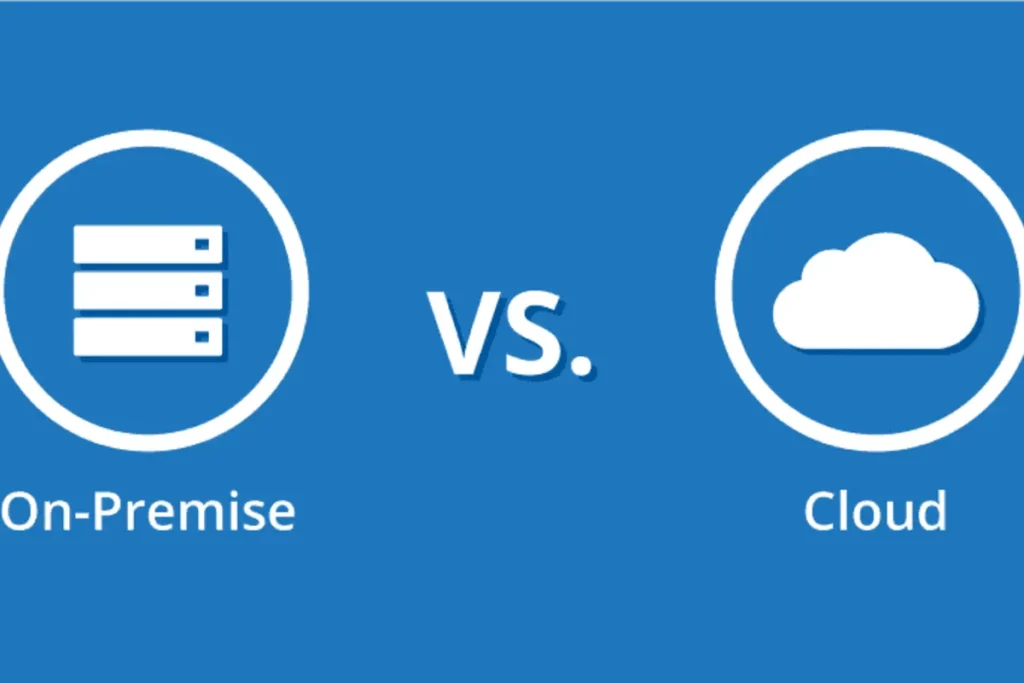
Well, from the benefits and also functions on premise server, also has outstanding differences with other types of antithesis namely the cloud.
The main difference with the cloud is in their target. Here's the difference between the two types.
1. Location
On premise centralized on the IT infrastructure (servers, storage devices, networks) and data is located within the physical location of the organization, whether at headquarters, branch office, or private data center.
The organisation has full control over the hardware. Meanwhile, the cloud operates in real time, and the IT infrastructure and data are housed in a third-party data centre (the cloud service provider).
Organizations do not have physical control over hardware, but they can access and manage data and applications over the Internet.
2. Ownership and Management
In an on premise setup, the organisation owns and manages the IT infrastructure and system data. This includes the purchase, upkeep, maintenance and updating of hardware and software.
While on the cloud, organizations rent IT infrastructure and computing resources from cloud service providers.
Cloud providers are responsible for maintenance and updating hardware, while organizations manage their own software and data.
3. Security
In an on premise environment, organisations and companies bear full responsibility for the security of this data and IT infrastructure.
This includes implementing appropriate security controls, such as firewalls, data encryption, and access controls.
Unlike these systems, the cloud carries the security responsibility shared between the organization and the cloud service provider.
Cloud providers are responsible for the security of their infrastructure, while organizations are accountable for the safety of their own data and applications.
It is important to understand the shared responsibility model when using cloud services.
4. Scalability
Scaling on premise IT infrastructure can be a challenge. Organisations must anticipate future needs and purchase sufficient hardware. Increasing capacity requires additional investment.
Meanwhile, the cloud offers high scalability. Organizations can easily add or reduce computing resources as needed. There is no need for a large initial investment in hardware.
For organisations with strict security requirements or those requiring full control over their data and infrastructure, these IT components require a greater investment and offer less flexibility in terms of scalability.
If an organization wants a flexible and scalable solution with lower initial costs, the cloud is a good choice.
However, organizations must be confident that their cloud service providers will protect their data so that the choice between cloud or on premise server depending on the needs and preferences of the organization.
Difference between On Premise and SaaS
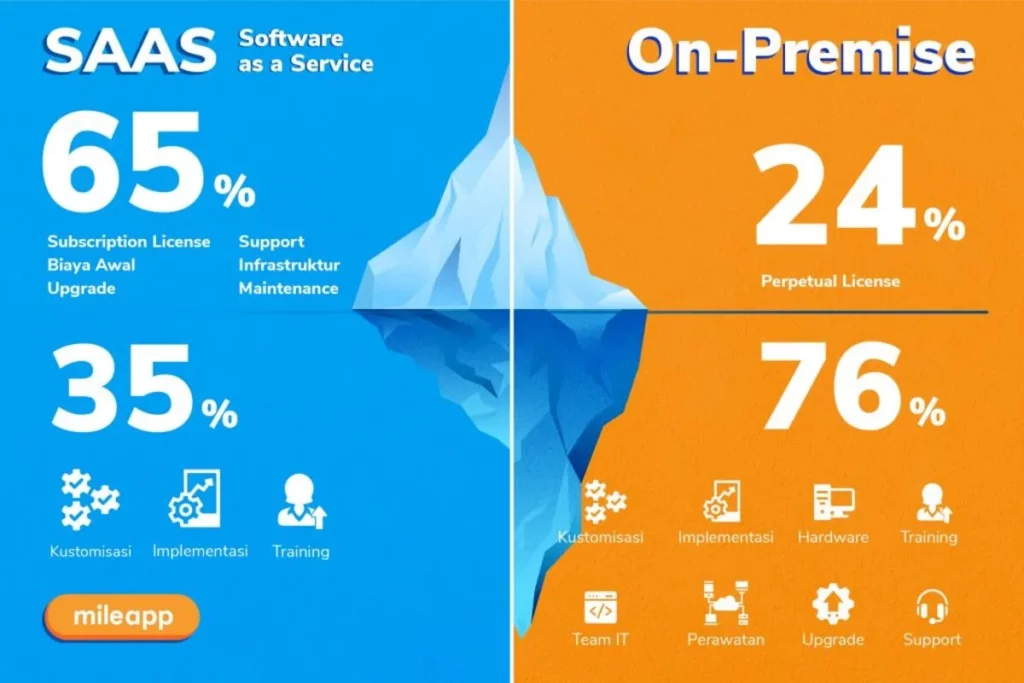
There are several notable differences between on-premises systems and SaaS that you should bear in mind when making your decision. Here are the differences.
Cost
The first difference lies in the cost. If this system is costly and is generally managed by a company, then the SaaS type will be paid by a third party and usually applies to the subscription system.
Accessibility
The other difference is in accessibility, where this system requires an instant software to activate and access it. While in SaaS systems, the access process is easier without the need for additional applications or extensions.
Security
On premise security is specific in nature, as it is generally intended for large-scale organisations. Meanwhile, SaaS, which has a more global customer base, generally offers more robust encryption.
Conclusion
This article explains the concept of on premise, one of the functions of which is to optimise the hardware network security system whilst a data audit is taking place, so that auditors can verify that the data matches the reports.
In this case, Audithink as trusted audit app provide features for on premise server which is effective and easy to understand, thus speeding up the audit process.
Audithink is ready to assist auditors with various new features and flexible. Visit the Audithink website for more information or to schedule a demo.