In terms of collecting data for a company or organization. A company will create a place that provides flexibility to store and process data. This is the place we often call data center or data center. Data centers are useful for being the main storage of digital data of a company and organization.
So you can conclude that a data center is a data storage place. But is that just the limit?
Of course not. There are many roles and uses that are useful for companies in managing each incoming and outgoing data.
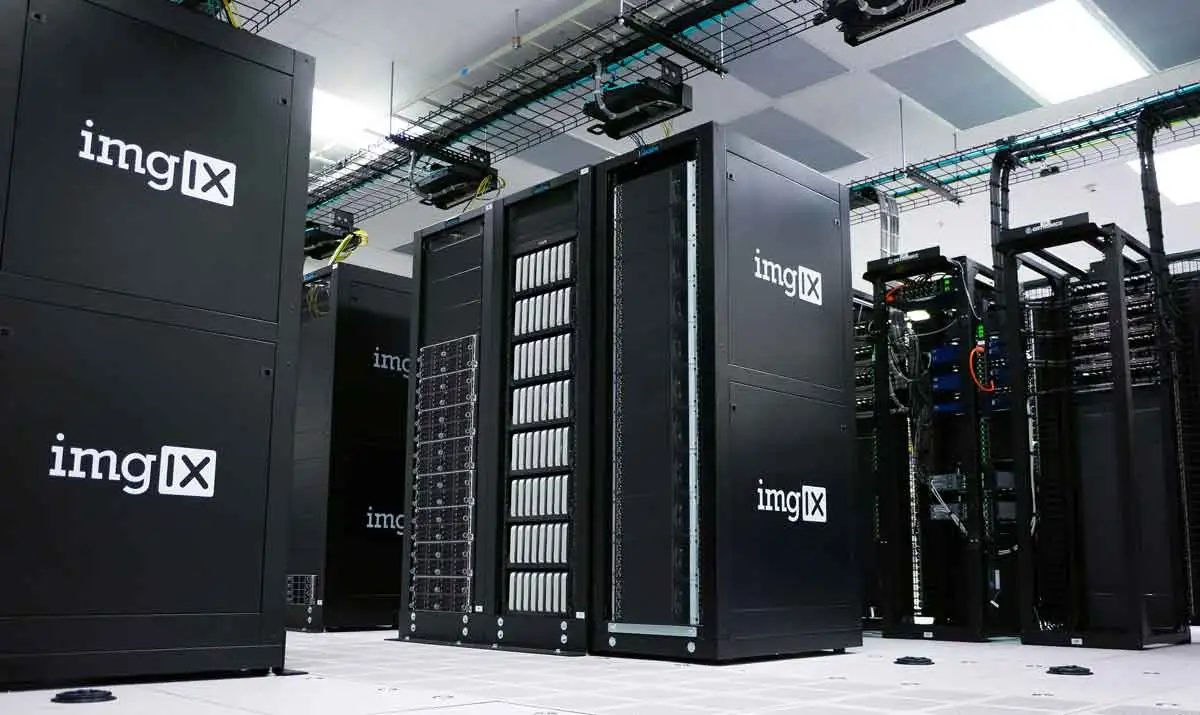
A data center is often found in the form of a large room and stores several digitally stored document files.
A data center can generally store a variety of files and documents in very large sizes depending on the size of the company's needs in using digital documents.
Because of the many things you need to know about data centers for companies in this article, let's explore more about what data centers really are and how they are useful and significant for companies especially when it comes to digital.
Definition of Data Center
You must feel alien when you hear the term . What is a data center? And what exactly does a data center do for a company? The general understanding is a room that is useful for a computer that stores data as a whole.
These data are stored digitally in various formats that computers can store them in.
Thus, all data that enters the company will finally be stored in the data center computer. A data center looks more like a room full of computers than a computer itself.
Data centers collect many elements of various types such as switches, routers, servers, security devices and large hard drives with large capacities.
Specifically, a data center is a computer media that is useful for storing all data belonging to a company or organization with certain specifications.
Each form of data will be stored in the data center in accordance with the storage category. That's why data centers consist of more than one digital storage medium.
Data Center Functions
Of the types, there are various useful data center functions. Returning to its main function, it is also useful for storing large amounts of data.
But there are some additional functions that serve to support the data center in both storage and data management. Here are the functions of the data center.
1. Storing and Managing Data
Its main function is to store and manage data. So that data will be stored properly and it will be easier to develop or expand data.
Data centers also have various features that help access data and perform data type scans to classify data more effectively.
2. Improving Data Security
By being in one storage place, data will be much safer both when accessing and developing data.
So it will provide 24-hour protection and will provide some security detection assistance from viruses or malware.
3. Increase Company Productivity
With the data expansion feature, the data center is an object that is able to make the company more effective and provide more up-to-date information related to data that is important to the company.
How The Data Center Works
A data center is a facility used to House computer systems and related components, such as telecommunications systems and data storage. Here is an explanation of how data centers work in general.
1. Physical Infrastructure
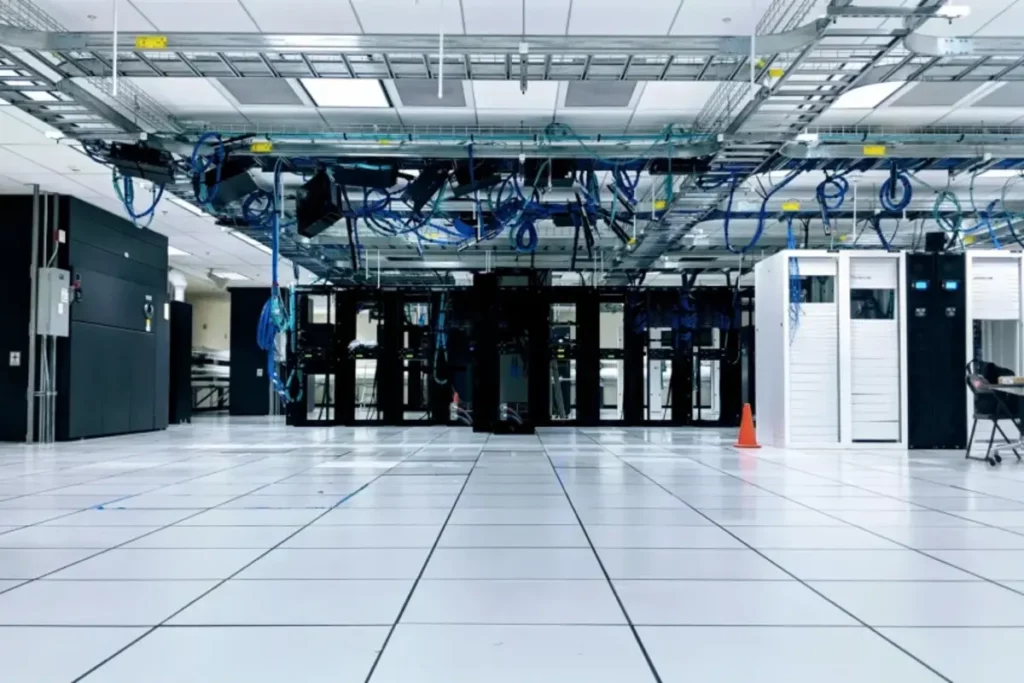
- Server Room: A Data center consists of server space that contains racks that house servers, data storage, and network devices.
- Cooling: Data centers need efficient cooling systems to keep device temperatures within safe limits.
- Power Supply: Data center dilengkapi dengan sumber daya listrik yang handal dan cadangan seperti UPS (Uninterruptible Power Supply) dan generator untuk memastikan ketersediaan daya terus-menerus.
- Physical Security: Data centers have physical security measures such as access control, CCTV, and security personnel to protect the hardware from physical threats.
2. Hardware
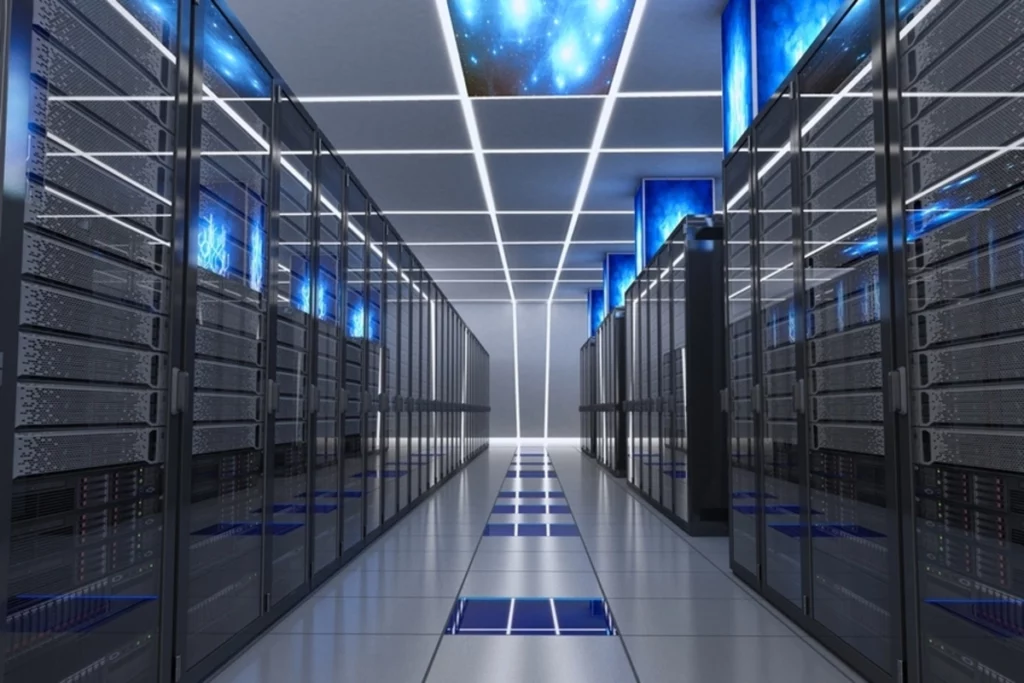
- Server: The primary device running applications and services. These servers can be physical or virtual servers.
- Storage: Storage device for storing data. Ini bisa berupa SAN (Storage Area Network), NAS (Network Attached Storage), atau penyimpanan cloud.
- Network Devices: Routers, switches, and firewalls that manage data traffic between devices and external networks.
3. Software (Software)
- Virtualization: Technology that allows one physical server to run multiple virtual machines (VMS), increasing the efficiency of hardware use.
- Operating System: Each server runs an operating system that supports applications and services.
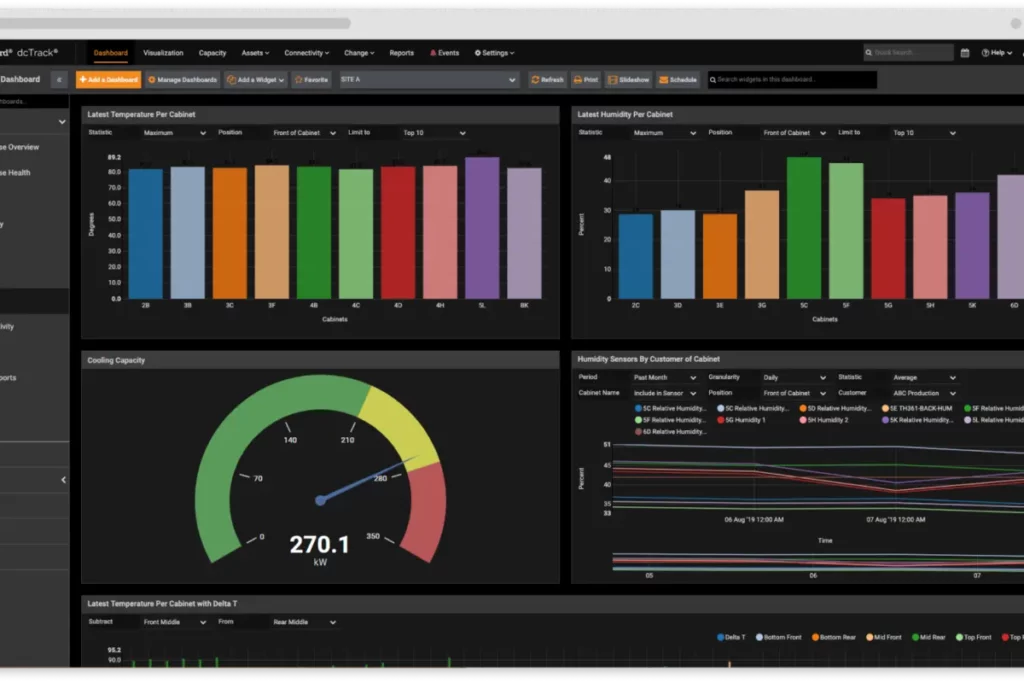
- Data Center Management: Software to monitor, manage, and automate data center operations, such as DCIM (Data Center Infrastructure Management).
4. Network
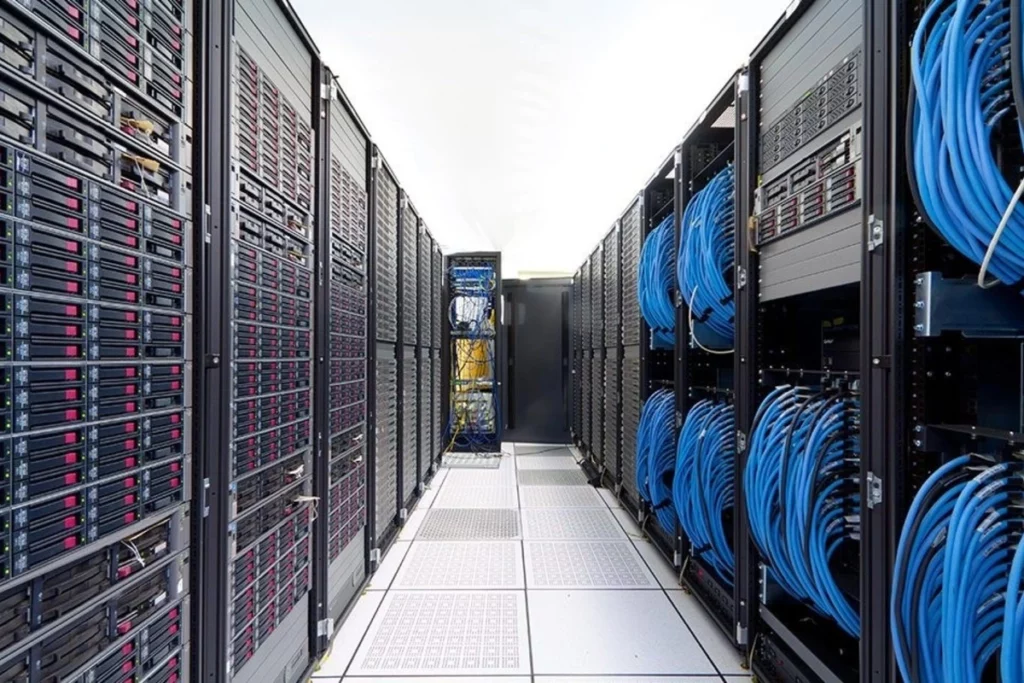
- Internet Connection: The Data center is connected to the internet through several internet service providers (ISP) for redundancy and high availability.
- Internal Network: A fast and reliable internal network connects servers, storage, and other devices within the data center.
5. Security
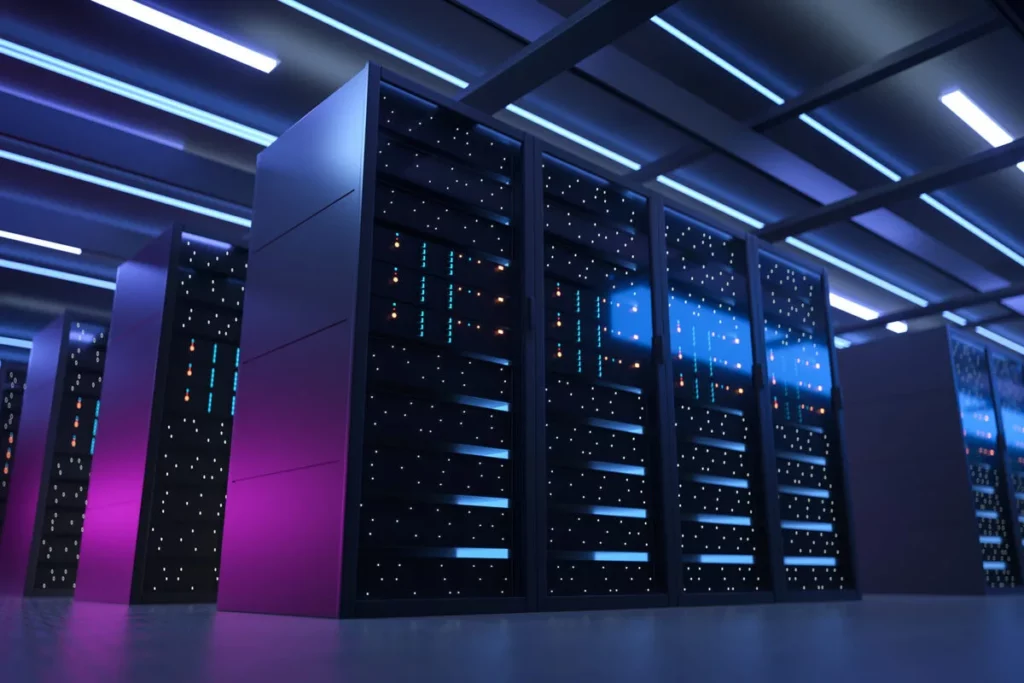
- Physical Security: Protection against unauthorized physical access to hardware.
- Network Security: Firewall, intrusion detection/prevention systems (IDS/IPS), dan enkripsi data untuk melindungi data dari ancaman cyber.
- Data Security: Routine backups, disaster recovery, and data security policies to protect data from loss or damage.
6. Operation and maintenance
- Monitoring: Monitoring system for monitoring the performance and health of hardware and software.
- Preservation: Regular maintenance such as replacement of faulty devices and software updates to maintain optimal performance.
- Energy Management: Energy consumption management for environmental efficiency and sustainability.
7. Compliance and certification
- Compliance: Comply with industry standards and regulations regarding data security and Privacy.
- Certification: Obtain certifications such as ISO 27001, SSAE 16, and others to demonstrate compliance with safety and operational standards.
With a complex infrastructure and multiple security and management mechanisms, data centers ensure that services and data remain available, secure, and reliable.
Data Center Type
In terms of components, there are several types of data centers that depend on various components. You need a type whose components match your needs and preferences to make managing and storing your company's data more effective and easier. Here are the three types that are commonly applied.
1. Enterprise Type
This type of data center is a type that has a design and design that is specifically for storing company data.
This type has the advantage of developing and expanding data that is company data so that the company will always be updated according to data developments.
2. Types of Colocation
Switch to a type of data center that offers expanded space on storage media according to the needs of the company.
For example, bandwidth and various aspects that can expand capacity for a fee.
So the disadvantage of this type of data center is that you have to prepare a budget according to the need for space expansion.
3. Types of Hyperscale
For this type of data center, it provides more ease in scaling and range by increasing the power of the system. So Hyperscale Data Centers are the most advanced and complex type of application.
Several multinational companies such as Apple, Meta, and Tesla, Google, and Amazon use this type.
Tips for choosing a good Data Center
Choosing a good data center is an important decision that can affect a company's performance, security, and operational costs. Here are some tips for choosing a good data center.
Location selection
Choosing a location close to the end user can reduce latency and increase data access speeds. Then avoid locations that are prone to natural disasters such as earthquakes, floods, or hurricanes.
Reliability
Look for data centers with recognized certifications such as the Uptime Institute Tier Standard, which indicates the level of reliability and redundancy. Then check the SLA offered, especially the Uptime Guarantee, which is usually expressed as a percentage.
Security
Make sure the data center has 24/7 surveillance, biometric access control, and other physical security measures. Then you need to make sure your data center uses firewalls, data encryption, and other cybersecurity measures to protect your data.
Connections and networks
The Data center must have a fast and reliable internet connection with multiple service providers (ISPs) for redundancy.
Infrastructure Redundancy
astikan data center memiliki pasokan listrik yang berlebihan, generator cadangan, dan UPS (Uninterruptible Power Supply). A reliable and redundant cooling system is essential to maintain a safe operating temperature for the hardware.
Data Center Components
Now from the definition of a data center, you understand that there are many components that make up a data center.
Each continuous component forms a network that is able to manage and protect data as well as solve and analyze problems that occur in data storage.
Here are the components that make up a data center and their respective functions.
1. Storage Media
The most important data center component is the storage media, which is where all the data is stored.
Storage media can be of two kinds such as HDD or (Hard-Disk Drive) and SSD (Solid-State Drive).
Although different, these two types can actually accommodate all types of data according to the needs of the company.
Apart from hardware, there are also other storage media in the form of an audit software. Such as data cloudNetwork-Attached Storage (NAS) or internet network-based storage, as well as other types.
In accordance with its main function, storage media functions to store and manage data in the company in various forms and various types.
Generally, an enterprise storage medium can reach terabytes.
2. Power Capacity
Another important component is power or power capacity on computers that are the media for storing and managing data in the data center.
You need to remember that this component operates for 24 hours. So it needs a very large power component.
Generally, the power capacity component will continue to be fulfilled by the unceasing flow of electricity. This electricity will flow to all other components including storage components. So it needs tools such as Uninterrupible Power Supply or UPS.
3. Safety System and Cooling System
Because a data center moves continuously with enormous power. It is necessary to add components cooling system as a computer cooler.
This cooling system can be a CVC or chilled water system that requires cold water to cool the computer machine.
Benefits of Data Center
There are various benefits of a data center. Here are the benefits of a data center.
1. Save Time and Cost
A company will save more costs and will save time archiving and storing data as well. Thus, it can make a company able to manage data online.
2. More Secure Device
The device that is the storage medium will be safer and better maintained even though it continues to operate for 24 hours. With the ability to detect types of data that are dangerous and contain viruses, as well as being able to sort data according to company interests.
3. The company knows more about the client's development
With never-ending developments, the company will be faster in knowing the development of clients through related data.
Every data including client data is also stored neatly in the data center. So the company can search for client data if needed.
FAQ Seputar Data Center
What is data center?
Data center atau pusat data adalah fasilitas berisi sistem komputer dan komponen terkait yang menyimpan seluruh data milik perusahaan secara digital. Di dalamnya terhimpun berbagai elemen seperti saklar, router, server, perangkat keamanan, hingga harddisk berdaya tampung besar.
Apa fungsi data center bagi perusahaan?
Tiga fungsi utama: menyimpan dan mengelola data agar mudah diakses serta dikembangkan, meningkatkan keamanan data dengan proteksi 24 jam termasuk deteksi virus dan malware, serta meningkatkan produktivitas perusahaan lewat fitur ekspansi data.
Apa saja komponen data center?
Tiga komponen inti: media penyimpanan berupa HDD, SSD, maupun penyimpanan berbasis jaringan seperti NAS dan cloud; power capacity yang didukung UPS karena beroperasi 24 jam; serta sistem keamanan dan cooling system such as chilled water system untuk mendinginkan mesin.
Apa saja jenis data center?
Tiga jenis umum: enterprise yang dirancang khusus untuk data perusahaan sendiri, colocation yang menawarkan perluasan ruang penyimpanan secara berbayar, dan hyperscale yang paling kompleks serta dipakai perusahaan multinasional seperti Apple, Meta, Google, dan Amazon.
Bagaimana cara kerja data center?
Ditopang infrastruktur fisik berupa ruang server, sistem pendingin, catu daya cadangan, dan keamanan fisik; perangkat keras berupa server, storage, serta perangkat jaringan; perangkat lunak seperti virtualisasi dan DCIM; jaringan dengan koneksi redundan dari beberapa ISP; ditambah operasi pemeliharaan rutin dan kepatuhan pada standar seperti ISO 27001.
Bagaimana memilih data center yang baik?
Pilih lokasi yang dekat pengguna akhir dan jauh dari daerah rawan bencana, periksa keandalan lewat sertifikasi seperti Uptime Institute Tier Standard beserta jaminan uptime pada SLA, pastikan keamanan fisik dan siber memadai, cek koneksi internet dari banyak penyedia, serta pastikan ada redundansi listrik dan sistem pendingin.
Conclusion
This is the explanation of this article regarding data centers. You need to know that a data center is useful for a company in providing centralized and comprehensive data storage services.
Data centers are a form of innovation in safe and effective data storage for companies and organizations.
Audithink is audit software to assist your company's internal team in audit and risk management.
We provide a variety of features that help make the audit process faster and more effective. Contact Audithink to get more information about our offerings.