
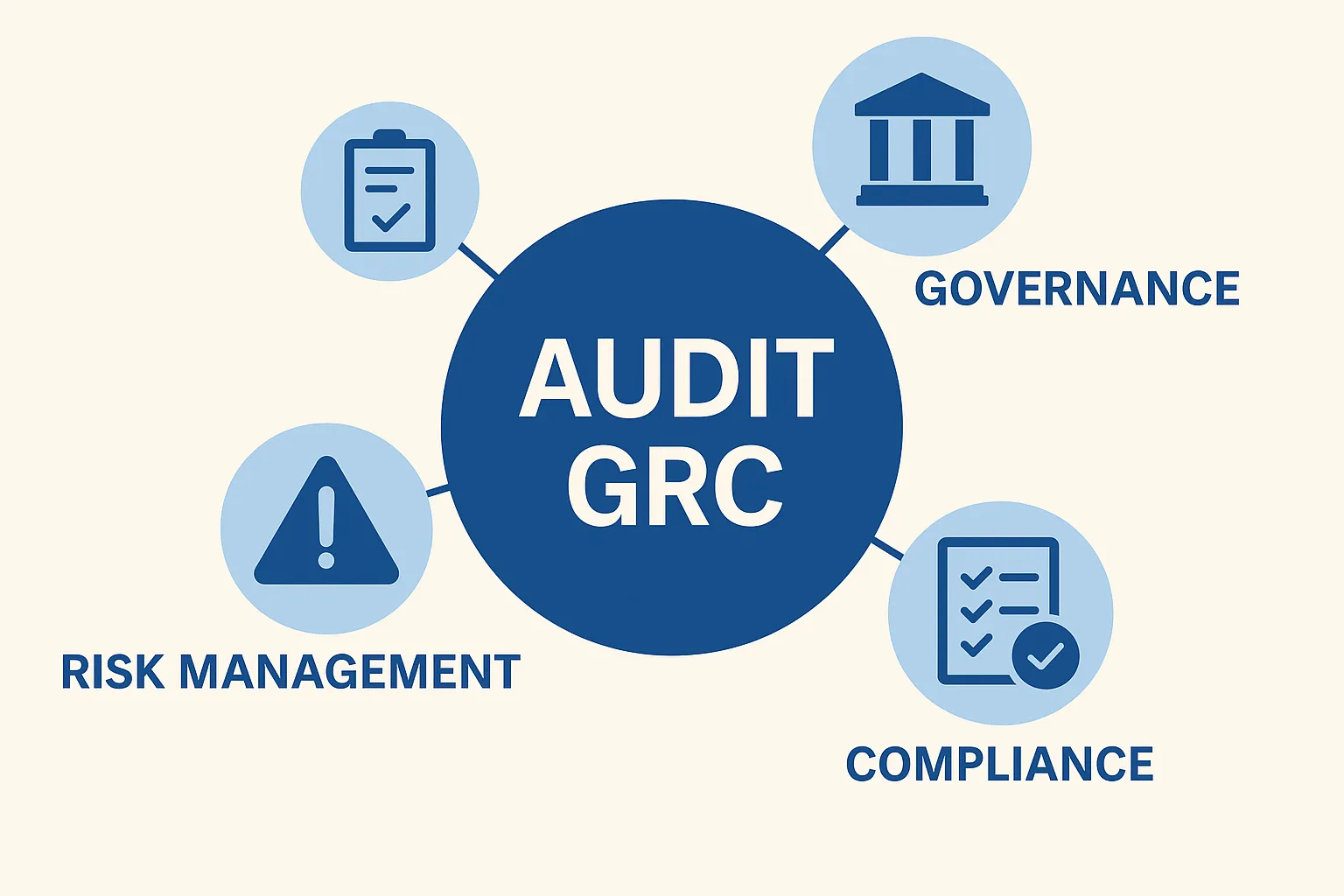
GRC audits strengthen risk management and organizational governance in a comprehensive and integrated manner.
In an era of fast-paced business and increasingly stringent regulations, organizations are not only required to comply, but also be able to manage risks and maintain healthy governance. This is where GRC audits play an important role.
This article will discuss in depth the use of such audits and how this approach forms the backbone for risk management and modern corporate governance.
What is GRC in Audit?
GRC stands for Governance, Risk Management, and Compliance. In the context of auditing, GRC is an integrated approach to evaluating and overseeing the effectiveness of policies, processes, and systems within an organization.
A GRC Audit is not just a document check, it is a systematic process that helps organizations identify risks, assess regulatory compliance, and ensure ethical and efficient governance practices.
Read Also: Understand What GRC Is and Its Benefits for Businesses
Difference between GRC Audit and conventional Audit
GRC audits have a wider scope than conventional audits. Here are some differences:
- Conventional audits tend to focus on financial compliance.
- This Audit includes a thorough evaluation of governance, Risk Management, and regulation.
- GRC audit supports strategic decision-making based on risk and control data.
What is the purpose of the GRC system?
The GRC system exists to unify the three main functions of an organization that previously ran independently. With a good GRC approach, organizations can:
- Reduce operational, financial and reputational risks.
- Improve process efficiency and decision making.
- Ensure compliance with national and global regulations.
- Strengthen the internal governance structure.
Long-term benefits of GRC in Internal Audit
The benefits of implementing the GRC system are very significant for the organization's internal audit, including:
- Detect weaknesses in internal control early.
- Provide strategic added value to the board and management.
- Direct the organization to continue to develop ethically and transparently.
How is GRC Audit in Risk Management?

Risk management is at the heart of GRC auditing. In practice, the audit helps organizations to:
- Identify and map significant risks.
- Evaluate the effectiveness of internal control.
- Assess the readiness of the organization in the face of adverse scenarios.
- Maintain business continuity through strategic risk mitigation.
GRC Audit process that focuses on risk
The GRC audit process should begin with an understanding of the risks inherent to the organization's activities. The steps include:
- Penilaian risiko awal (risk assessment).
- Mapping controls and policies that have been implemented.
- Gap analysis between risk and control.
- Follow-up plan or continuous improvement.
Examples of risks evaluated in a GRC Audit
Some of the common risks addressed in this audit include:
- Data and cyber security risks
- Regulatory compliance risks
- Strategic risk (long-term business decisions)
- Reputational risk

What Are the Key Components of an Integrated GRC Audit?
A GRC Audit works well if its three components synergize with each other. The following is the description of each element:
1. Governance
Strong organizational governance forms the main foundation of GRCs.
- Transparent and accountable organizational structure
- Ethical and responsible decision-making mechanisms
2. Risk Management
Structured risk management helps organizations stay alert and adaptive.
- Risk identification, analysis, evaluation, and mitigation
- The role of the risk owner and integration into business processes
3. Compliance
Compliance becomes an important component that binds all elements of the GRC.
- Compliance with local and international regulations (ISO, SOC 2, etc.)
- Compliance Audit as part of the GRC cycle
What Are the Steps to Conduct an Effective GRC Audit?
In order for GRC audits to run optimally and provide meaningful insights, systematic steps are needed:
- Determine the scope of the audit and the team of auditors.
- Carry out an initial risk assessment.
- Collect evidence and documentation from related units.
- Analyze the effectiveness of existing controls.
- Prepare a report of findings and recommendations.
- Monitoring the implementation of audit results.
Digital Tools Supporting GRC Audits
The use of digital tools can improve the efficiency and accuracy of audits.
- Automated audit platforms such as Vanta, Sprinto, or LogicGate
- Risk and compliance Dashboard
- Cloud-based documentation for cross-team collaboration
What Are the Challenges in Implementing GRC Audits?
The implementation of GRC audits does not always go smoothly. Here are the common challenges that are often faced:
- Lack of understanding between divisions regarding the role of GRCs.
- Resistance to changes in governance culture.
- Difficult integration of traditional audit systems with modern GRC platforms.
- Limited human resources who are experts in the field of audit and risk.
Strategies to overcome GRC challenges
So that these challenges do not hinder the performance of the organization, the following solutions can be applied:
- Regular internal education and training
- Pendekatan kolaboratif antar tim (audit, risiko, legal, compliance)
- Investment in technology and system integration
FAQ About GRC Audits
What is a GRC audit?
GRC is short for Governance, Risk Management, and Compliance. In the context of auditing, GRC is an integrated approach to evaluating and overseeing the effectiveness of policies, processes, and systems within an organization.
What is the difference between a GRC audit and a conventional audit?
Conventional audits tend to focus on financial compliance, while GRC audits cover a thorough evaluation of governance, risk management, and regulation — while supporting strategic decision-making based on risk and control data.
What is the purpose of a GRC system?
Reducing operational, financial, and reputational risks; improving process efficiency and decision-making; ensuring compliance with national and global regulations; and strengthening the internal governance structure.
What are the main components of a GRC audit?
Governance in the form of a transparent organizational structure and ethical decision-making mechanisms; risk management in the form of risk identification, analysis, evaluation, and mitigation; and compliance in the form of meeting local and international regulations such as ISO and SOC 2.
What are the steps for an effective GRC audit?
Determining the audit scope and auditor team, performing an risk assessment at the start, gathering evidence and documentation from the relevant units, analyzing the effectiveness of existing controls, preparing the findings and recommendations report, then monitoring the implementation of audit results.
What are the challenges in implementing GRC audits?
A lack of understanding between divisions about GRC's role, resistance to governance culture change, difficulty integrating traditional audit systems with modern GRC platforms, and limited personnel skilled in audit and risk.
GRC Audit is not just a compliance, but a strategic pillar
GRC audits are a holistic approach that not only helps organizations comply with regulations, but also strengthens risk management systems and sustainable governance. With proper implementation, auditing is able to become the foundation of long-term strategic decisions.
Strengthen auditing processes and proactively manage your organization's risk with smart technology-based solutions.
Visit Audithink or contact us at Contact Audithink for a comprehensive and reliable GRC solution.