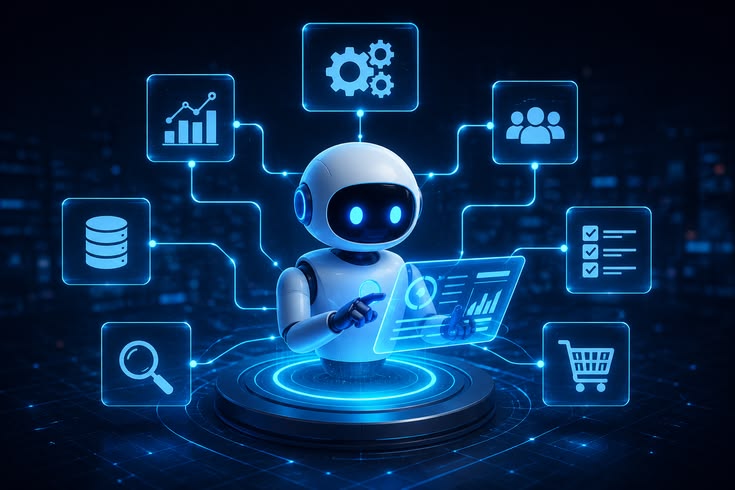
The business world continues to move at an unprecedented pace. Global uncertainty, from market volatility and cyber threats to regulatory changes and supply chain disruptions, is forcing companies to rethink how they manage risk. This is where... Enterprise Risk Management (ERM) is present as a strategic framework that can no longer be executed manually or reactively.
Entering 2026, the trend of AI-based ERM for enterprises is gaining momentum in response to the increasing complexity of multi-layered risks. Artificial intelligence (Artificial IntelligenceAI is more than just a tool; it has become the backbone of modern risk management systems, capable of analyzing data at scale, detecting anomalies in real time, and even predicting risks before they occur. This article takes a deep dive into how AI is changing the ERM landscape and what companies need to prepare for this shift.
What Is AI-Based ERM?
Before discussing the trends, it is important to answer a basic question: What is ERM in a company?
ERM is an integrated and comprehensive approach to identifying, assessing, responding to, and monitoring risks that can impact the achievement of organizational objectives. Unlike conventional risk management, which is siloed and reactive, ERM views risk holistically across all lines of business.
AI-based ERM is an evolution of this approach, where artificial intelligence technology encompasses machine learning, natural language processing (NLP), and predictive analytics are integrated into the risk management cycle. The result is a system that:
- Capable of processing volumes of data far beyond human capacity
- Learn from historical patterns to generate more accurate risk predictions.
- Automate risk reporting and monitoring processes
- Provides adaptive and real-time mitigation recommendations
Why Is AI the Key to Modern Risk Management?
In the context of enterprise risk management in 2026, spreadsheet-based approaches and periodic reports are no longer sufficient. Here's why AI is a key element:
- Massive data volume. Modern companies generate data from thousands of transaction points, system logs, social media sentiment, financial reports that are impossible to analyze manually simultaneously.
- The rate of change in risk. Cyber threats, for example, can emerge and evolve within minutes. AI enables much faster early detection.
- Human bias. Risk assessments that rely entirely on humans are prone to cognitive biases. A well-trained AI model can produce more objective assessments.
- Increasing regulatory pressure. Regulators in various countries, including Indonesia through the Financial Services Authority (OJK), increasingly emphasize the importance of data- and technology-based risk management.
What Are the Key Trends in AI-Based ERM?
Here are the most significant AI-based ERM trends for companies today:
1. Analitik Risiko Prediktif (Predictive Risk Analytics). AI uses historical data and external variables to predict the likelihood of future risks. This lets companies move from a reactive approach to a proactive one.
2. Pemantauan Risiko Berkelanjutan (Continuous Risk Monitoring). Instead of periodic audits, AI-based systems monitor risk indicators in real time around the clock. The technology connects directly to ERP systems, financial platforms, and cybersecurity logs (rexy, 2024).
3. Otomasi Pelaporan Risiko. NLP and generative AI can now compile risk reports automatically from various data sources, reducing the risk team's workload and speeding up decision-making.
4. Integrating AI with the Framework of GRC (Governance, Risk, and Compliance). AI does not work alone. Current trends show deep integration between AI-based ERM platforms and existing GRC systems, creating a more cohesive governance ecosystem.
5. Penggunaan Large Language Models (LLMs) for Risk Document Analysis. LLMs such as GPT are used to read and interpret thousands of regulatory documents, contracts, and audit reports automatically, identifying potential risks human reviewers might miss.
What Are the Benefits of Implementing AI-Based ERM?
- Perbankan: Banks use AI to detect suspicious transactions (fraud detection) in real time, which previously required large analyst teams with slower response times.
- Manufaktur: Sensor IoT combined with AI is used to predict machine failures (predictive maintenance), so the risk of production disruption can be anticipated much earlier.
- Asuransi: Insurance companies use AI models to assess customer risk individually, producing more accurate, fairer premiums.
- Perusahaan publik: AI helps analyze compliance risk against ever-changing regulations, reducing the risk of sanctions and fines.
In general, the benefits of implementing AI-based ERM include:
- Improved accuracy in risk identification and assessment
- Pengurangan biaya operasional fungsi risiko
- Percepatan waktu respons terhadap insiden
- Peningkatan kepercayaan pemangku kepentingan (stakeholders)
- More consistent regulatory compliance

What Are the Challenges of Implementing AI-Based ERM?
Meski menjanjikan, penerapan ERM berbasis AI bukan tanpa hambatan. Perusahaan perlu mewaspadai tantangan berikut:
- Kualitas data. AI models are only as good as the data that trains them. Incomplete, inconsistent, or biased data will produce misleading output.
- Kesenjangan kompetensi. Many companies, especially in Indonesia, still lack people who understand both the technical aspects of AI and the risk management domain.
- Kepercayaan terhadap model (Model Trust). Senior decision-makers are often reluctant to rely on recommendations generated by AI “black boxes” without understanding the logic behind them.
- Data security and privacy. AI systems require access to sensitive data, which poses its own security risks if not managed properly.
- Initial implementation costs. Technology infrastructure and AI model development require significant investment.
What Is the Strategy for Implementing AI-Based ERM in a Company?
For implementation to be effective, companies need a structured approach such as:
- Starting from Identifying Needs. First, map out which risk areas are most critical and would benefit most from AI automation. Don't try to automate everything at once.
- Build a Solid Data Foundation. Investment in data governance covering standardization, cleanliness, and data accessibility are prerequisites before AI models can perform optimally.
- Choose the Right Platform. Evaluate AI-based ERM solutions available in the market, taking into account integration capabilities with existing systems, scalability, and vendor support.
- Develop HR Capacity. Train risk teams to understand how AI models work, read their output critically, and intervene when needed.
- Implement Gradually (Phased Rollout). Start with a pilot project in one business unit or one risk category, evaluate the results, and then gradually scale it across the organization.
- Ensure Regulatory Compliance. Align AI implementation with guidelines issued by relevant regulators, such as the OJK's information technology risk management guidelines for the financial sector.
What Is the Role of AI-Based ERM in Supporting GRC?
AI-based ERM has a strategic role in strengthening the ecosystem Governance, Risk, and Compliance (GRC) as a whole. The three are interconnected:
- Governance: AI provides comprehensive visibility of a company's risk profile to the board of directors and audit committee, supporting more evidence-based decision-making.
- Risk: The essence of AI-based ERM is the ability to detect, measure, and respond to risks more quickly and accurately than conventional methods.
- Compliance (Kepatuhan): AI is able to automatically monitor regulatory changes and assess their impact on company operations, ensuring more proactive compliance.
FAQ About AI-Based ERM
What Is AI-Based ERM?
AI-based ERM is the evolution of Enterprise Risk Management where machine learning, natural language processing, and predictive analytics are integrated into the risk management cycle — so the system can process high-volume data, predict risks, and give adaptive mitigation recommendations.
Why Is AI the Key to Modern Risk Management?
Because corporate data volumes are now massive and impossible to analyze manually, risks change very quickly such as cyber threats, human judgment is prone to cognitive bias, and regulatory pressure — including from OJK — increasingly emphasizes data- and technology-based risk management.
What are the main trends in AI-based ERM?
Predictive risk analytics, continuous risk monitoring connected directly to ERP systems and cybersecurity logs, automated risk reporting via NLP and generative AI, and deep integration between AI-based ERM platforms and existing GRC frameworks.
What Are the Benefits of Implementing AI-Based ERM?
Improved accuracy in risk identification and assessment, reduced operational costs of the risk function, faster incident response times, increased stakeholder trust, and more consistent regulatory compliance.
What are the challenges of implementing AI-based ERM?
Incomplete or inconsistent data quality, human competency gaps, trust in AI models, security and privacy of sensitive data, and initial implementation costs for infrastructure and model development.
What is the strategy for applying AI-based ERM?
Start by identifying the needs and most critical risk areas, build a foundation of data governance that is solid, choose the right platform, develop the risk team's capacity, roll out gradually through a pilot project, and ensure compliance with regulator guidelines.
Conclusion
The trend of AI-based ERM for enterprises is no longer a fantasy; it's a reality that's reshaping how organizations view and manage risk. In the enterprise risk management landscape of 2026, companies that integrate artificial intelligence into their ERM frameworks will have a real advantage: faster threat detection, more accurate responses, and better preparedness for uncertainty.
However, technology is only half the equation. The success of AI-based ERM implementation depends heavily on data quality, human resource competency, and leadership commitment to embrace change. Companies that treat AI as a strategic partner, not just an automation tool, will reap the greatest benefits from this risk management revolution.
Therefore, companies need a risk management system that can assist with real-time risk monitoring and support faster, data-driven decision-making. To meet these needs, a GRC application is needed. Audithink can help companies manage Enterprise Risk Management (ERM) processes in a more integrated and adaptive manner.
This application is designed to be easily integrated with various company systems, supports continuous risk monitoring, and helps with data-driven risk and compliance management. Submit a demo now and find out how our app works.